

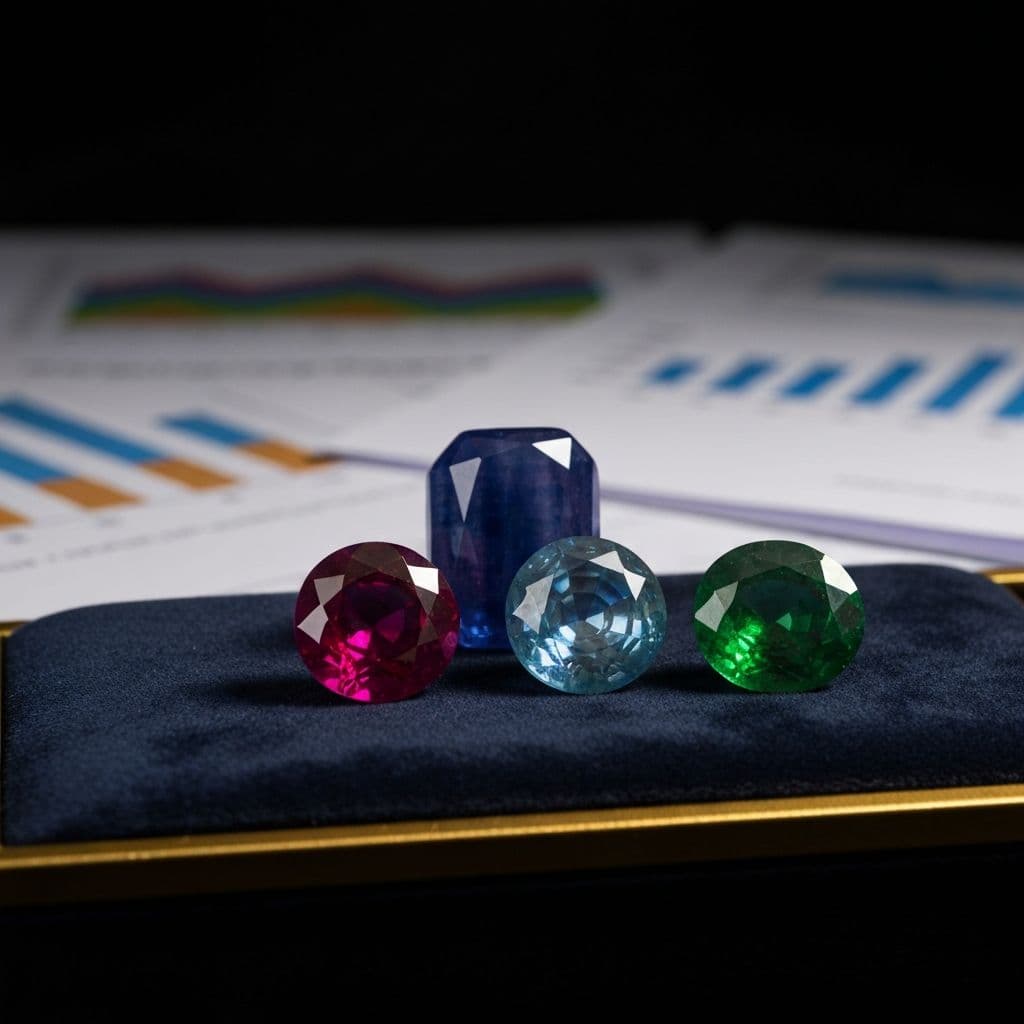
In an era of economic uncertainty, high-quality coloured gemstones have emerged as a compelling alternative asset class. Unlike stocks or bonds, these tangible assets combine aesthetic pleasure with genuine investment potential, offering portfolio diversification and protection against inflation.
Historical Appreciation
Top-quality gemstones have shown consistent value growth over decades
Inflation Hedge
Tangible assets that maintain value during economic turbulence
Portable Wealth
Concentrated value that can be easily stored and transported
What Makes a Gemstone Investment-Grade?
Not all gemstones are suitable for investment. Investment-grade stones represent the top tier of quality and rarity, typically comprising less than 1% of all gemstones mined. These exceptional specimens meet stringent criteria:
- Exceptional Quality: Stones must exhibit outstanding colour, clarity, and cut - falling into the top grades of their type.
- Natural and Untreated: While heat treatment is accepted for some stones, the most valuable investment pieces are completely natural.
- Certified Provenance: Documentation from respected laboratories (GIA, AGL, Gubelin, SSEF) is essential.
- Desirable Size: Generally, investment stones should be above a certain carat weight - typically 2+ carats for rubies, 5+ for sapphires.
The "Big Three" Investment Gemstones
Rubies: The King of Gems
Fine rubies, particularly those from Myanmar's Mogok Valley, consistently command the highest prices per carat of any coloured gemstone. The legendary "pigeon blood" colour - a vivid red with a subtle blue fluorescence - remains the most sought-after. In recent years, fine Burmese rubies have appreciated by 6-8% annually.
Blue Sapphires: Timeless Elegance
Kashmir sapphires, though virtually unavailable from their original source since the early 1900s, set the standard for the species. Their velvety, cornflower blue continues to break auction records. Sri Lankan (Ceylon) and Burmese sapphires also represent excellent investment opportunities.
Emeralds: The Collector's Choice
Colombian emeralds from the Muzo and Chivor mines define the ideal: a vivid, slightly bluish-green with moderate inclusions. Despite their relative softness, fine emeralds have shown remarkable appreciation, particularly specimens with confirmed Colombian origin.
Market Performance
Over the past 30 years, top-quality rubies have appreciated approximately 7% annually, outperforming gold and many traditional investments. The key is focusing on quality over quantity - a single exceptional stone will outperform multiple lower-grade specimens.
Beyond the Big Three
Sophisticated investors are increasingly looking beyond traditional choices:
- Alexandrite: The finest colour-change alexandrites are rarer than diamonds and command extraordinary prices.
- Padparadscha Sapphires: These pink-orange sapphires from Sri Lanka are among the rarest gemstones in existence.
- Paraiba Tourmalines: Discovered in 1989, these electric blue-green tourmalines have seen dramatic appreciation.
- Fine Spinels: Long undervalued, top-quality red spinels are gaining recognition as ruby alternatives.
Building Your Portfolio
A well-structured gemstone portfolio should balance risk and potential return. Consider allocating:
- Core Holdings (60%): Investment-grade rubies, sapphires, and emeralds with impeccable documentation.
- Growth Potential (30%): Exceptional specimens of rarer varieties that show appreciation potential.
- Speculative (10%): Emerging varieties or unusual specimens with significant upside potential.
The Glowgem Investment Service
Our investment advisory service helps collectors build portfolios tailored to their goals. With 30 years of market experience, we provide access to exceptional stones, authentication services, and ongoing market guidance. Every investment-grade stone comes with comprehensive documentation and our authenticity guarantee.
Essential Considerations
- Long-term Horizon: Gemstone investment typically requires a 5-10 year minimum holding period to realise optimal returns.
- Proper Storage: Professional safe storage with appropriate insurance is essential.
- Documentation: Maintain comprehensive records including certificates, purchase receipts, and photographs.
- Exit Strategy: Consider how you will eventually sell - auction houses, dealers, or private sales each have merits.