

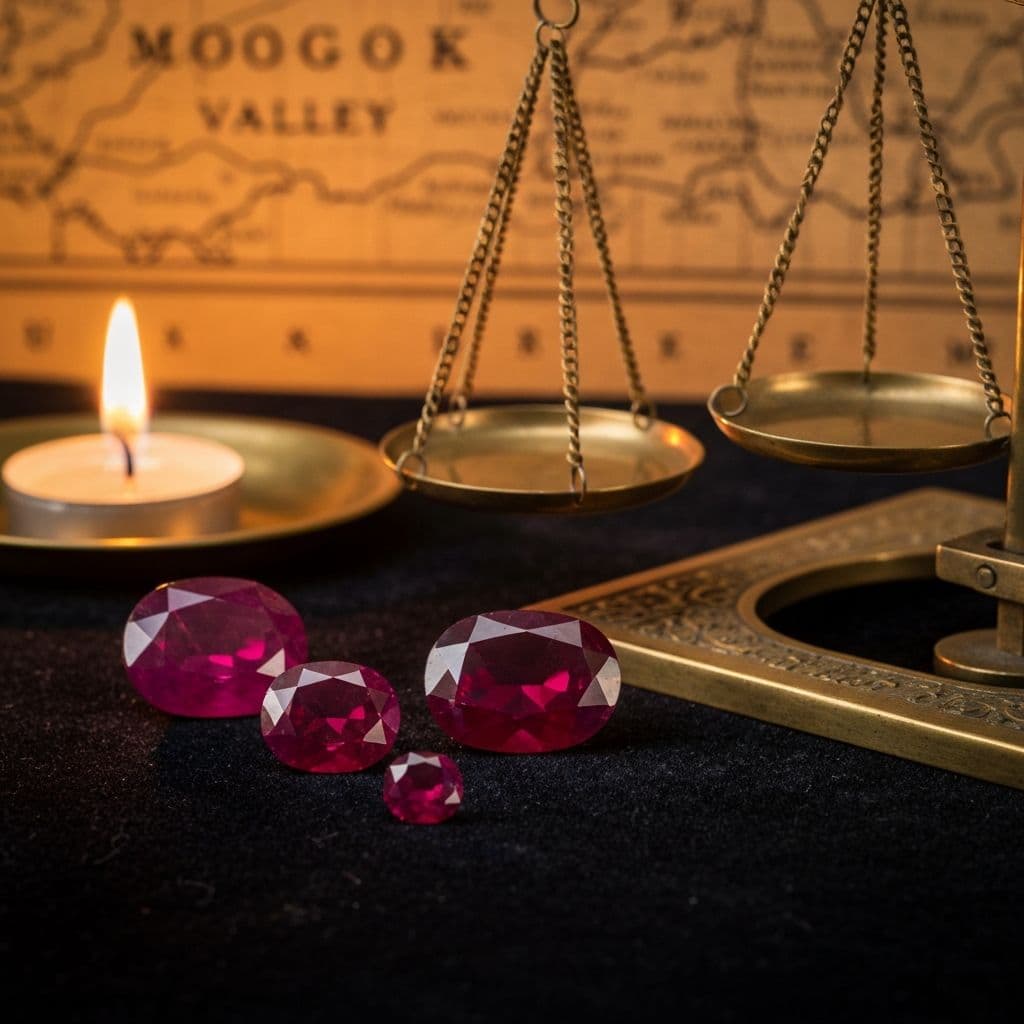
Deep in the highlands of Myanmar lies the Mogok Valley - a remote region that has produced the world's finest rubies for over a millennium. Known as the "Valley of Rubies," this legendary source has yielded stones that have adorned the crowns of kings and commanded record prices at auction.
Location
Mogok Valley, Mandalay Region, Myanmar (Burma)
Royal Heritage
Burmese kings controlled mining for centuries
Pigeon Blood
The most prized colour in the ruby world
The Valley of Rubies
The Mogok Valley sits at 1,200 metres elevation, surrounded by mountains that have protected both its ruby deposits and its mystique. The region's unique geology - marble host rock formed through intense metamorphism - creates rubies of unparalleled colour and character.
Historical accounts suggest ruby mining in Mogok began at least 800 years ago, though local legend places the discovery even earlier. For centuries, Burmese kings claimed all significant rubies as royal property, with miners facing severe punishment for concealing large stones.
What Makes Burmese Rubies Special
Several factors combine to make Mogok rubies the standard against which all others are measured:
- Pigeon Blood Colour: The term describes an intense red with a subtle blue undertone and strong fluorescence. This colour, seen only in Burmese rubies, seems to glow even in low light.
- Silk: Microscopic rutile needles create a soft, velvety appearance that diffuses light beautifully. This "silk" is actually considered desirable in Burmese stones.
- Fluorescence: Strong red fluorescence makes Burmese rubies appear even more vivid in daylight, which contains UV light.
- Marble Origin: Unlike rubies from other sources that form in basalt, Mogok rubies crystallise in marble, resulting in purer colour.
The Pigeon Blood Standard
The term "pigeon blood" reportedly derives from the colour of the first drop of blood from a freshly killed pigeon - a vivid red that hasn't yet oxidised. Today, major gemological laboratories use specific parameters to award this coveted designation, but the term remains subjective. True pigeon blood rubies represent perhaps 1% of all Burmese production.
A Royal Legacy
Throughout history, Burmese rubies have been the stones of kings and emperors. The Burmese monarchs themselves recognised the ruby as a stone of invincibility - warriors would embed rubies in their flesh, believing this would make them impervious to harm in battle.
European royalty prized Burmese rubies above all other gems. The French Crown Jewels contained spectacular Mogok rubies, as did the Russian Imperial collection. The Maharajas of India, despite having access to other ruby sources, specifically sought Burmese stones for their most important pieces.
Famous Burmese Rubies
- The Sunrise Ruby (25.59 carats): Sold for $30.3 million in 2015, setting a world record price per carat for any gemstone at auction.
- The Graff Ruby (8.62 carats): Another record-setter, this pigeon blood ruby sold for $8.6 million - $1 million per carat.
- The DeLong Star Ruby (100.32 carats): One of the world's largest and finest star rubies, now in the American Museum of Natural History.
- The Mogok Ruby: A legendary 40-carat stone said to have been found in the 15th century, its current whereabouts unknown.
Mining Then and Now
Traditional mining in Mogok relied on simple tools and manual labour. Miners would dig narrow tunnels following ruby-bearing zones, hauling gravel to the surface in baskets for washing and sorting. This artisanal approach continues today alongside more mechanised operations.
The industry has faced numerous challenges. International sanctions, internal conflict, and depletion of easily accessible deposits have all impacted production. Fine Burmese rubies have become increasingly scarce, driving prices to unprecedented levels.
Collecting Burmese Rubies Today
For serious collectors, Burmese rubies represent the pinnacle of gemstone acquisition. However, navigating this market requires expertise:
- Origin Verification: Laboratory reports from GIA, Gubelin, or SSEF can confirm Burmese origin with high confidence.
- Treatment Status: Unheated Burmese rubies command substantial premiums over heated stones.
- Colour Assessment: "Pigeon blood" designation from a reputable lab significantly increases value.
- Provenance: Historical ownership can add considerable value to important stones.
The Glowgem Collection
Our long-established relationships with trusted sources in Myanmar give us access to exceptional Burmese rubies that rarely appear on the open market. Each stone comes with comprehensive certification and our personal guarantee of authenticity. For collectors seeking the finest, we can source specific criteria through our network.
An Enduring Legacy
The mystique of Burmese rubies endures because no other source has matched Mogok's quality. While fine rubies are found in Mozambique, Madagascar, and Vietnam, gemologists and collectors still measure all rubies against the Burmese standard.
As fine Burmese material becomes increasingly scarce, these gems represent not just beauty and value, but a tangible connection to one of earth's most remarkable geological phenomena and centuries of human fascination with the king of gems.