

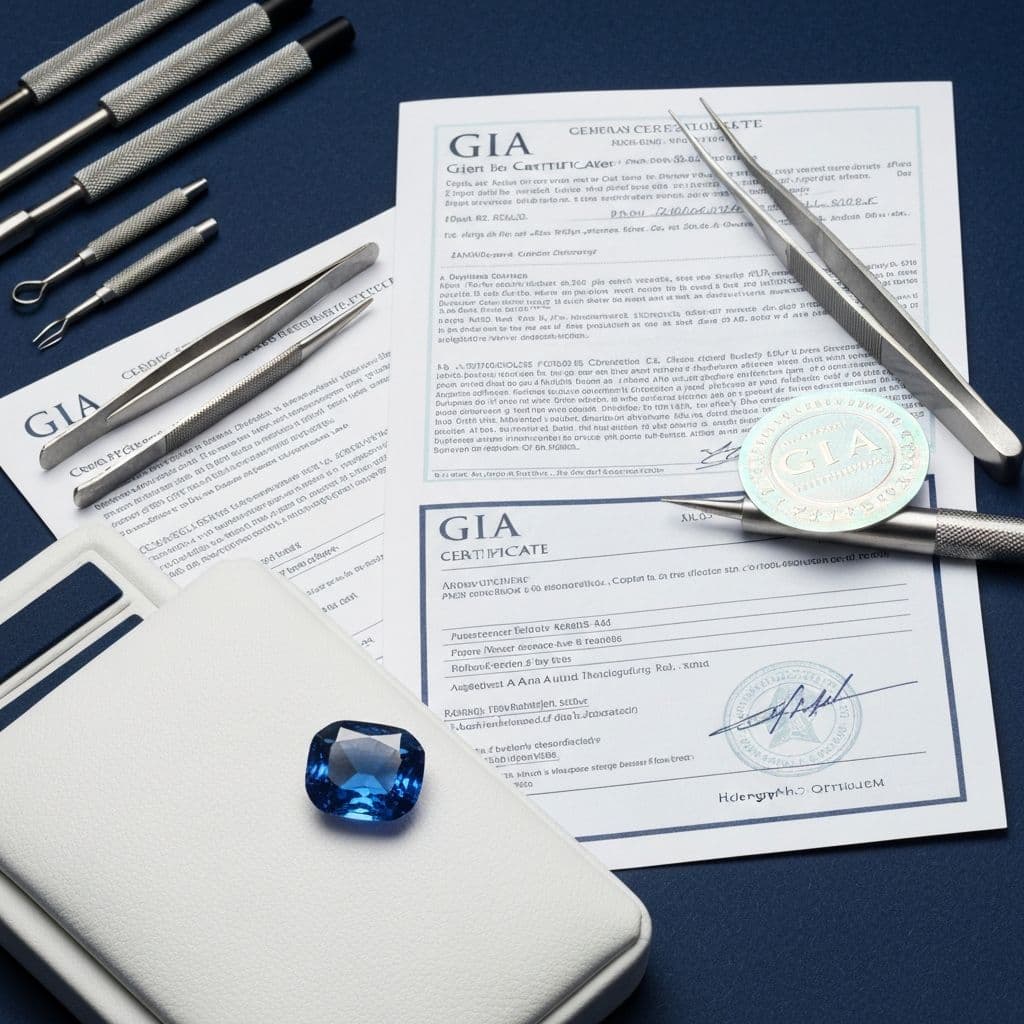
In a market where natural and synthetic gems can appear identical, and where treatments can dramatically alter appearance, professional certification provides the independent verification that protects buyers and ensures transparency. For any significant gemstone purchase, proper documentation isn't optional - it's essential.
Authentication
Confirms natural origin vs synthetic or simulant
Treatment Disclosure
Identifies any enhancements or modifications
Origin Determination
Provides geographic source when possible
What a Certificate Contains
A comprehensive gemstone report from a reputable laboratory includes:
- Identity: Confirmation of the gem species and variety (e.g., natural ruby, natural sapphire).
- Measurements: Precise dimensions and carat weight.
- Colour Description: Detailed assessment of hue, saturation, and tone.
- Clarity Assessment: Description of inclusions and their impact.
- Cut Evaluation: Assessment of proportions and craftsmanship.
- Treatment Status: Disclosure of any detected enhancements.
- Origin Opinion: Geographic source determination when conclusive.
- Photographs: Documentation images for identification.
Leading Gemological Laboratories
GIA (Gemological Institute of America)
The world's largest and most recognised gemological organisation. GIA established the diamond grading standards used worldwide and provides highly respected coloured stone reports. Their reports are widely accepted in both retail and auction markets.
Gubelin Gem Lab
Based in Switzerland, Gubelin is considered the premier laboratory for coloured gemstone origin determination. Their reports carry particular weight for high-value rubies, sapphires, and emeralds. Gubelin pioneered many of the inclusion studies used to determine geographic origin.
SSEF (Swiss Gemmological Institute)
Another Swiss laboratory with exceptional expertise in coloured gemstones. SSEF reports are particularly valued for their detailed treatment analysis and conservative origin determinations. Often used for the most significant auction pieces.
AGL (American Gemological Laboratories)
Specialising in coloured gemstones, AGL provides detailed reports with comprehensive treatment disclosure. Their colour grading system for coloured stones is widely referenced in the trade.
Choosing a Laboratory
For significant purchases, we often recommend obtaining reports from multiple laboratories. While this involves additional cost and time, it provides the highest level of confidence, particularly for origin-sensitive stones like Kashmir sapphires or Burmese rubies.
Understanding Origin Reports
Origin determination is one of the most valuable - and challenging - services laboratories provide. Gemologists analyse inclusions, trace elements, and spectroscopic signatures to determine where a stone formed. However, it's important to understand the limitations:
- Origin is stated as an "opinion" based on available evidence
- Some stones cannot be definitively sourced
- Different laboratories may reach different conclusions
- Heat treatment can sometimes complicate origin determination
Treatment Disclosure Standards
Laboratories use standardised terminology to describe treatments:
- "No indications of heating" - The most desirable designation, commanding premium prices.
- "Heated" or "Evidence of heat treatment" - Standard heat treatment detected.
- "Minor enhancement" - For emeralds, indicates typical minor oil treatment.
- Specific treatment descriptions - Details on any other modifications detected.
The Glowgem Certification Standard
Every significant gemstone sold by The Glowgem is accompanied by certification from one or more respected independent laboratories. We never sell major pieces without proper documentation, and we can arrange additional certification upon request. For our most important stones, we obtain reports from multiple laboratories to ensure the highest level of confidence.
Verifying Your Certificate
Reputable laboratories provide ways to verify report authenticity:
- Online Databases: Most major labs allow you to verify reports online using the report number.
- Security Features: Look for holograms, special paper, and other anti-counterfeiting measures.
- QR Codes: Many modern reports include scannable codes linking to digital verification.
- Direct Contact: You can always contact the laboratory directly to verify a report.
The Value of Documentation
Beyond providing peace of mind at purchase, proper certification serves important long-term purposes:
- Insurance: Insurers require professional documentation for valuable pieces.
- Resale: Certified stones command higher prices and sell more easily.
- Estate Planning: Documentation helps establish value for inheritance purposes.
- Authentication: Protects against disputes about a stone's characteristics.